'Arsène who?' 30 years on from the hire that changed English football
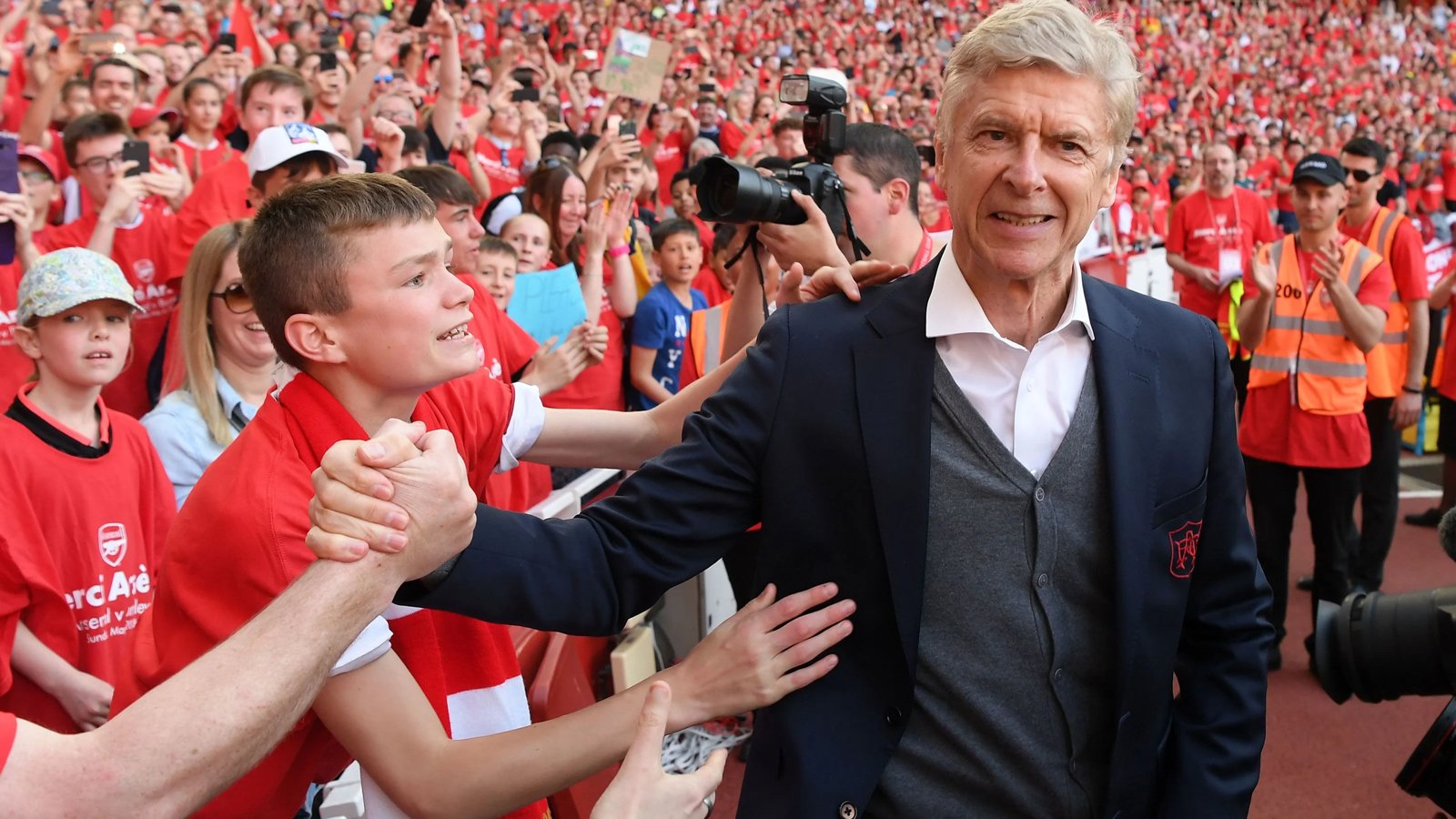
Thirty years ago this week, Arsenal appointed a manager almost nobody in English football had heard of. On 30 September 1996, Arsène Wenger was confirmed as the club's new boss, and the London Evening Standard's billboards asked the question the whole country was asking: "Arsène Who?"
The Guardian's retrospective on the anniversary details just how sceptical the initial reaction was. Arsenal were in flux after sacking Bruce Rioch, with Stewart Houston and Pat Rice taking interim charge and talk of Johan Cruyff circulating. Vice-chair David Dein gathered the squad to reassure them a world class appointment was coming. When he announced the name, one player's response was blunt: "Who the f*** is he?"
The Friday Injury Tracker
Who's out, who's back and what it means for the next two games.
A dressing room that was 'culturally English'
Wenger described the squad he inherited as "culturally English" and immediately went to the French market, bringing in two more unknowns in Patrick Vieira and Rémi Garde. By the time he left the club in 2018, every Premier League dressing room resembled a United Nations.
He was the trailblazer who preceded Gérard Houllier and Rafael Benítez at Liverpool and, given their later animosity, José Mourinho at Chelsea. The first non-British or non-Irish manager in the top flight had been Dr Jozef Venglos at Aston Villa in 1990, and his failure had hardened English football's prejudices. Wenger, nicknamed Le Professeur, initially seemed to fit that mould. Tony Adams thought him a "geography teacher". Ian Wright dubbed him Clouseau.
Sir Alex Ferguson was dismissive from the outset: "Arsène Wenger's been in Japan, he doesn't know anything about the English game." That laid the foundations for a decade long rivalry Ferguson himself later called "toxic".
The innovations that became standard practice
Wenger brought in sports scientist Dr Yann Rougier, French osteopath Philippe Boixel and English psychologist David Elliott. Arsenal were the first club to sign up with ProZone to analyse performance data. The "Evian broccoli" diet arrived just as Adams had announced he was an alcoholic, and the defender credited Wenger's nutritional approach with transforming the back end of his career.
Not everyone complied immediately. Nigel Winterburn told the Guardian: "We'd wait for Arsène to walk [away], then most of the players would pile into the little kiosk and buy chocolate and eat Mars bars under the table."
Crucially, Wenger did not tear the place down. "There were rumours that he was advised to get rid of the back four," Winterburn said. "But I think he made his own decisions when he saw the players playing and training, and saw the desire they had." He grafted Vieira, Emmanuel Petit and Marc Overmars onto that English core, let Dennis Bergkamp flourish, and later added Thierry Henry, Robert Pires and Freddie Ljungberg on the road to the Invincibles.
Even those least likely to sing his praises acknowledge the scale of the shift. "Wenger changed the whole course of [English] football," Neil Warnock told the Guardian. "He made people who'd been in the game a long time [realise] that you had to change with the times."
Ferguson himself, upon Wenger's 2018 departure, called him "one of the greatest Premier League managers". Three decades on from the appointment that prompted a nation to ask "Arsène Who?"the question has long since answered itself.